Why eligibility matters so much
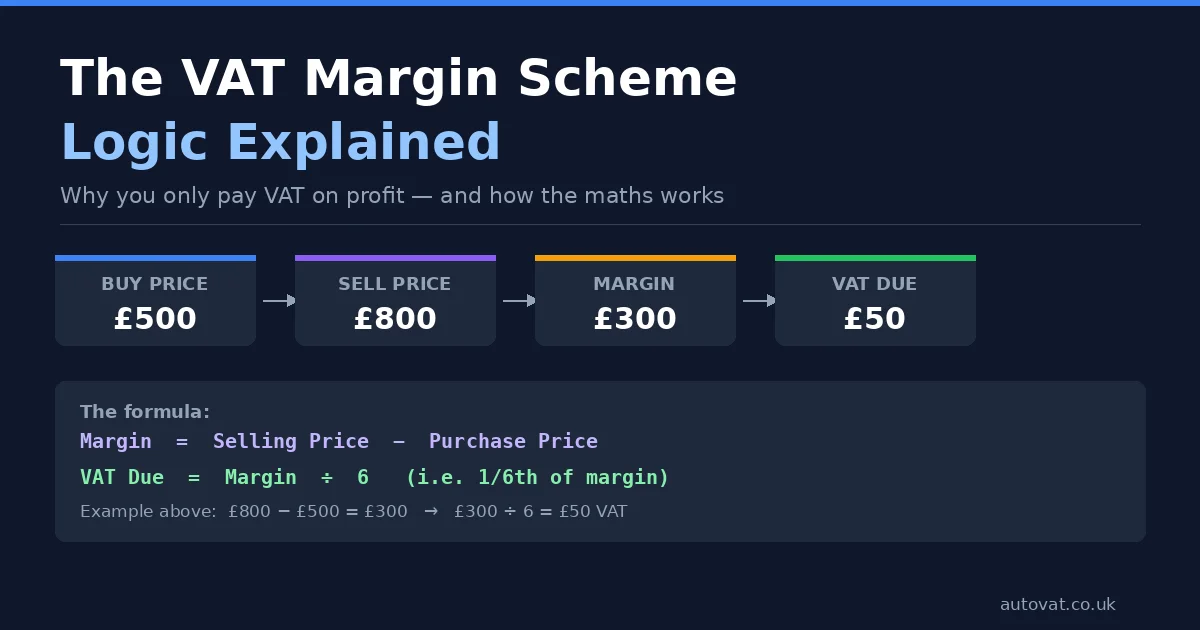
The VAT Margin Scheme lets VAT-registered dealers pay VAT only on their profit margin rather than the full selling price. That can make a significant difference to your take-home on every sale. But the scheme only applies to goods that meet HMRC's eligibility criteria. Buy the wrong type of stock — or buy it from the wrong type of seller — and you will owe full VAT on the entire sale price when you come to sell it. Getting this wrong is one of the most common and costly mistakes margin scheme dealers make.
What types of goods are eligible?
HMRC sets out four categories of goods that can be sold under the margin scheme. These are:
- Second-hand goods — tangible moveable goods that have been used and are resold as they are, or after repair. This covers cars, electronics, furniture, clothing, tools, and most physical items that have had a previous owner.
- Works of art — paintings, drawings, collages, sculptures, and similar pieces created by hand.
- Collector's items — postage stamps, coins, currency, medals, and similar items of collecting interest.
- Antiques — goods that are more than 100 years old.
For the full HMRC definition of each category, see VAT margin schemes guidance on GOV.UK.
Who you buy from is just as important as what you buy
Even if the item itself qualifies, it only becomes eligible for the margin scheme when you purchase it from a seller who could not charge you VAT. That typically means:
- A private individual (the most common source for second-hand dealers)
- A business that is not VAT-registered
- Another VAT-registered business that sold the item to you under the margin scheme and did not show VAT separately on their invoice
- A business that was not entitled to reclaim the input VAT on the item when they originally bought it
If the seller charged you VAT on the purchase and you have a valid VAT invoice for it, the item is not eligible for the margin scheme. You would reclaim that input VAT normally and charge output VAT on the full selling price when you sell it.
What makes a purchase ineligible?
Several common situations knock an item out of margin scheme eligibility:
- You received a VAT invoice showing VAT separately — if a supplier charged you VAT and you can reclaim it, you cannot then use the margin scheme on the sale.
- The item is new, not second-hand — the scheme is for used goods. A brand-new item bought from a manufacturer or wholesaler never qualifies.
- The item is a consumable — fuel, food, raw materials, and similar consumables are not eligible regardless of source.
- Precious metals or stones sold for their intrinsic value — gold, silver, platinum, and gemstones sold purely as a commodity rather than as a worked item of jewellery do not qualify.
Mixing eligible and non-eligible stock
Many dealers buy job lots at auction that include both eligible and ineligible items. Each item must be assessed individually. You cannot apply the margin scheme to the whole lot if some items within it are ineligible. Your stock book needs to record each eligible item separately, and any ineligible items should be accounted for under standard VAT rules.
How to stay on top of this in practice
The eligibility check should happen at the point of purchase, not at the point of sale. When you acquire a stock item, record where it came from, confirm there is no VAT invoice, and flag it as margin scheme stock in your records. Trying to work it out six months later when your VAT return is due leads to errors and missed margin scheme benefits.
AutoVAT captures eligibility information at the purchase stage and flags any item that might not qualify, so you are never left guessing when the VAT quarter closes. Get in touch to find out how we set this up around your buying process.