Please note: This article is for general information only and does not constitute legal or financial advice. Speak to a qualified accountant or tax adviser before making decisions about your business structure.
The two main options
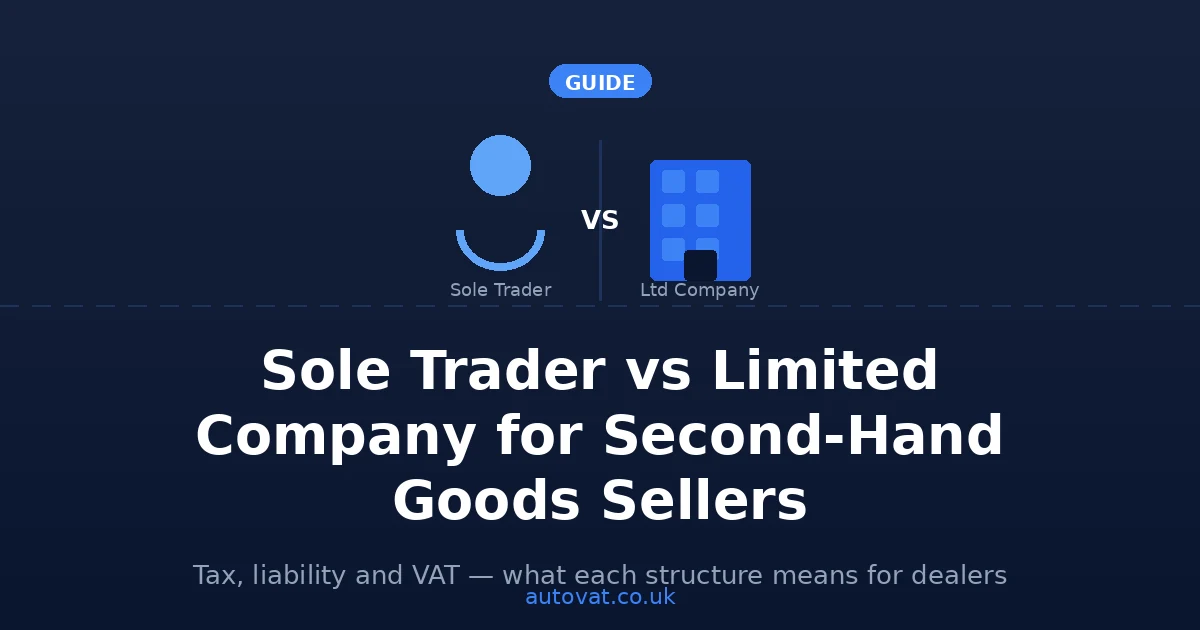
Most second-hand goods dealers in the UK operate as either a sole trader or a private limited company. Both structures can use the VAT Margin Scheme — the scheme applies equally to both, and there is no VAT advantage to one structure over the other. The differences come down to income tax, National Insurance, liability, and administrative burden.
Sole trader: simple to start, straightforward to run
Registering as a sole trader is straightforward. You register with HMRC for Self Assessment, report your profits once a year on a Self Assessment tax return, and pay Income Tax and Class 4 National Insurance on your profits. There is no requirement to file accounts publicly or appoint directors.
For a second-hand dealer just starting out or running a relatively modest turnover, sole trader status keeps things simple. Your accounting requirements are lighter, and you do not need to worry about dividend planning or director's salary structures.
The main drawback is that there is no legal separation between you and your business. If the business has debts or faces a legal claim, your personal assets — including your home — are at risk. For dealers who hold significant stock value or who trade in high-value items, this is worth thinking about carefully.
Limited company: more tax planning flexibility, more admin
A private limited company is a separate legal entity. It pays Corporation Tax on its profits (currently 19% for profits up to £50,000, rising to 25% for profits above £250,000 under the current tapered rate structure). You as a director take a combination of salary and dividends, which can be more tax-efficient than sole trader income tax rates at higher profit levels.
A limited company also gives you limited liability, which means your personal assets are generally protected if the company cannot pay its debts. For dealers running higher stock values or taking on business credit, this separation can be valuable.
The trade-off is more administration. Limited companies must file annual accounts with Companies House, submit a Corporation Tax return, and maintain company records. This typically means paying an accountant, which is an additional cost a sole trader may not need.
VAT registration: the same threshold applies to both
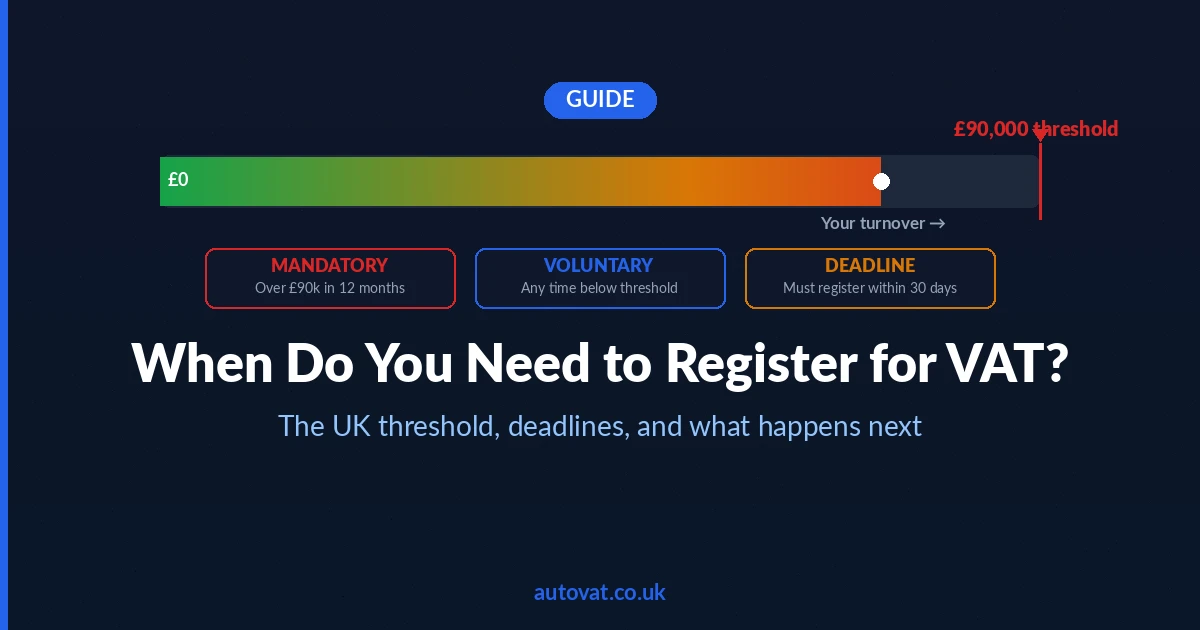
Whether you are a sole trader or a limited company, the VAT registration threshold applies the same way. Once your taxable turnover in any rolling 12-month period exceeds the current threshold (£90,000 as of 2026), you must register for VAT. See HMRC's VAT registration guidance for full details.
Once registered, you can use the VAT Margin Scheme in either structure — your business type makes no difference to your eligibility for the scheme.
Which is right for you?
As a rough guide, many second-hand dealers start as sole traders and consider incorporating as profits grow — typically somewhere above £30,000–40,000 net profit per year, where the Corporation Tax and dividend structure often becomes more efficient than Income Tax. However, the right threshold depends heavily on your personal circumstances, other income, and how you plan to draw money from the business. An accountant can run the numbers for your specific situation.
What does not change with either structure is the need for solid VAT Margin Scheme bookkeeping. AutoVAT works with both sole traders and limited companies, and we configure your records and reporting to match your exact setup. Get in touch to find out more.