Does selling on these platforms affect your VAT obligations?
The platforms you sell on do not change your underlying VAT obligations. If you are VAT-registered and you sell eligible second-hand goods, the VAT Margin Scheme rules apply regardless of whether you sell through your own website, eBay, Facebook Marketplace, Depop, or Vinted. Your responsibility is to account correctly for VAT on every sale — the platform is just the channel.
Vinted, Depop, and Facebook Marketplace: what they do and don't do
None of these three platforms currently handle VAT Margin Scheme accounting on your behalf. They are designed primarily for casual private sellers, not for VAT-registered trade sellers running margin scheme businesses. This has a few practical implications:
- No margin scheme invoicing — the platforms generate their own receipts or order confirmations, none of which comply with margin scheme record-keeping requirements. You will need to issue your own separate records.
- No tax reporting for margin scheme VAT — the sales data you receive from these platforms does not distinguish between margin scheme and standard VAT sales. You need to track this yourself.
- Platform fees — the commission or selling fees charged by these platforms are a general business overhead. You can reclaim input VAT on platform fees through your normal VAT return, as they are not directly tied to individual margin scheme items.
Do not charge VAT separately on your listings
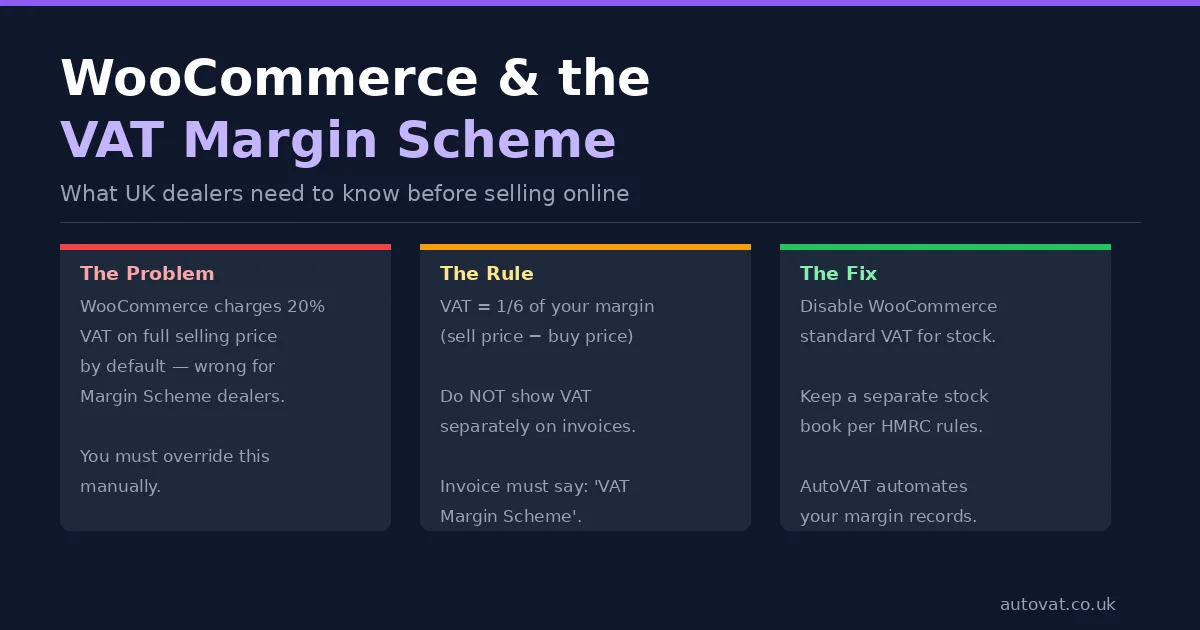
If you are selling under the margin scheme, the price you list is the all-in price — VAT is embedded and must not be shown separately. These platforms have no mechanism to display a "VAT Margin Scheme" price in the way a proper B2B invoice would. Your listings should simply show the selling price. The VAT element is yours to account for internally.
Record-keeping when selling across multiple platforms
When you sell on several platforms simultaneously, keeping your stock book accurate becomes more challenging. Each sale needs to be matched back to the original purchase record, regardless of which platform generated it. This means:
- Exporting your order data from each platform regularly
- Matching each sale to the correct purchase record and stock number
- Recording the buyer's name and address (platforms sometimes make this difficult to access in bulk)
- Calculating the margin and VAT due for each item sold
Doing this manually across Vinted, Depop, and Facebook Marketplace alongside other channels is time-consuming and error-prone. Gaps in records are the most common trigger for problems during an HMRC VAT inspection.
Platform reporting obligations (HMRC's side)
Since January 2024, digital platforms operating in the UK are required to report seller data to HMRC under the OECD Model Reporting Rules. This means Vinted, Depop, and Facebook Marketplace are reporting your sales volumes and income to HMRC if you sell above certain thresholds. HMRC can therefore cross-reference what the platform reports against what you declare on your VAT return. Accurate, complete records matter more now than ever. For more detail on platform reporting requirements, see HMRC's guidance on digital platform reporting.
How AutoVAT helps multi-platform sellers
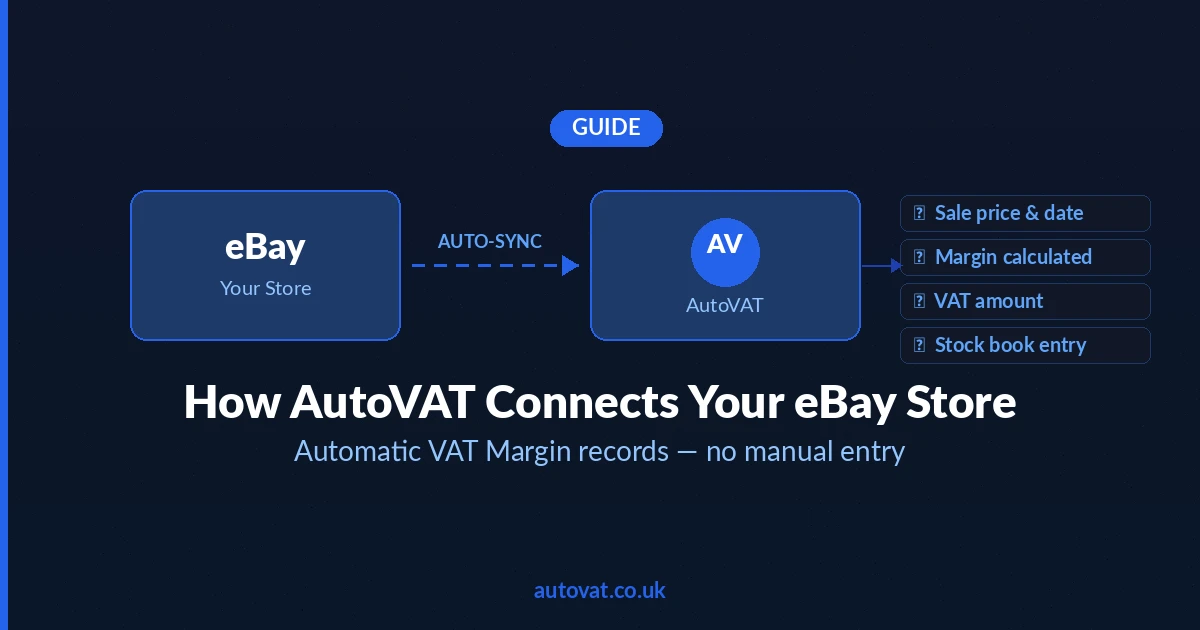
AutoVAT connects your sales channels — including eBay and WooCommerce — and pulls your order data into a single margin scheme stock book. If you sell on Vinted, Depop, or Facebook Marketplace, we can build a custom integration or import process around your specific setup so that every sale is captured, matched to its purchase record, and correctly accounted for. Get in touch to tell us which platforms you use.